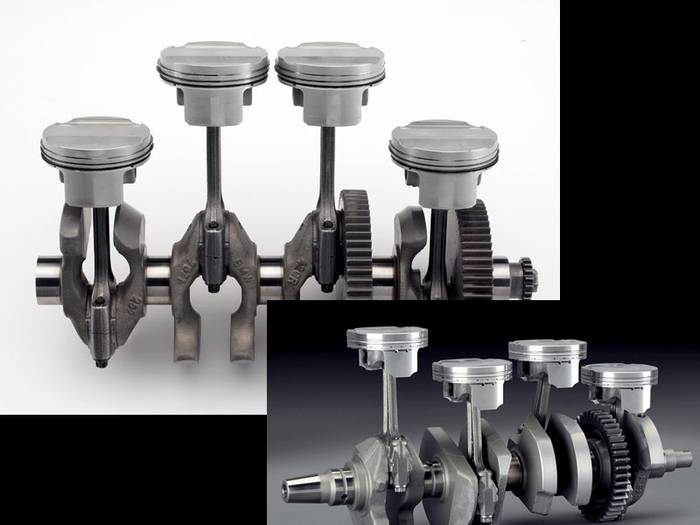
Thats a very meaty and interesting article, I had to read it slowly, carefully.

One thing it brought to mind is the fundamental difference between a cross plane and a flat plane crankshaft. Most American V8's (NASCAR) are cross plane (90 degree) while many, if not most, "exoctic" cranks (like Ferrari) are flat plane (180).
Cross plane requires heavier offset weights for balance and are slower to rev up and down than flat plane. While flat plane tend to have balance problems often addressed by a counter rotating balance shaft. The lighter weight of a 180 crank allows for quicker engine revs.
The cross plane also has inherent problems with exhaust flow interference's that lead to such things as the "bundle of snakes" found on the GT-40. While the flat plane has a more easily managed exhaust flow dynamics.
An early racing trick with the Ford flat head V8 was to change from a cross plane to a flat plane crankshaft. The engine vibrated a lot, but ran like stink.
This picture might help with the 90 degree vs 180 degree crank throw positions. Note the difference in crank offset weights as well. One fires every 90 degree's of rotation. The other, every 180 degree's.