purepop
Sun March 7, 2004 1:37pm
|
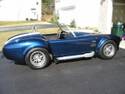
Jet Carb Transformed My Sideoiler
Don't run a motor until you have Jet Carb do a Stage 3 conversion. Huge gas mileage increase,Perfect throttle response and increased horsepower!!!!
|
|
Sloth
Sat May 8, 2004 7:17pm
|
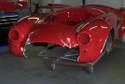
Ouch!
This is my finished Cobra after an "Incident on 52nd Street". The shell has been removed for repair. Damn horsepower.
|
|

chill
Sun May 16, 2004 4:45pm
Rating: 10
|
18000 Horespower
While riding along with 40 Cobras, I roughly calculated 18,000 Horsepower!!!
|
|
LwCwb
Sun May 23, 2004 5:06pm
Rating: 10
|
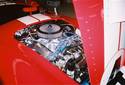
700hp 351
700 Horsepower 351 in a BDR at Carlisle
|
|
4RE KLR
Wed June 8, 2005 9:33am
|
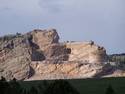
"Crazy Horse"
Look close. Can you see Carzy Horse pointing to the right? Look for his face.
|
|
mgiannetto
Wed January 4, 2006 6:07pm
|
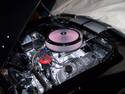
A 500 Horsepower Monster
Engine by Danbury Competition Engines
|
|

Ophidia
Mon February 13, 2006 9:42am
Rating: 10
|
|
427snake
Thu May 25, 2006 1:10pm
Rating: 10
|
|

CoupedUp
Tue July 18, 2006 6:50pm
Rating: 9
|
|
CJ428CJ
Wed February 7, 2007 5:35pm
Rating: 10
|
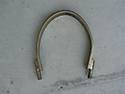
Driveline
My new horseshoe shaped safety loop
|
|

Trevor Legate
Mon June 25, 2007 8:54am
Rating: 10
|
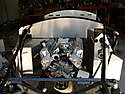
Cobra-eater
Serious horse-power!
|
|
Dennis Larson
Tue September 25, 2007 8:43am
|
Factory Ford Crate 302/340 horse
The only way to go
|
|

392cobra
Sat February 23, 2008 12:12pm
Rating: 10
|
John W. Smith : Last Messenger
John W. Smith on horseback,Col.W.B. Travis handing off the last message to Gen. Sam Houston
|
|
Michael J
Thu January 1, 2009 5:03pm
Rating: 10
|
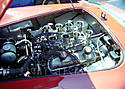
CSX 2002 Engine Bay
CSX 2002 with Ford 289 cubic inch small block. 1967 competition engines were claimed to develop a maximum of 390 horse power at 6750 RPM. This 1962 version, the first competition engine, probably made significantly less.
Contact me at lightcatcher@bresnan.net for more details.
|
|
kitcarbp
Thu March 19, 2009 10:30am
Rating: 10
|
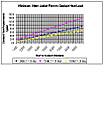
500+ HP Engine Water Jacket Coolant Flow Requirements
This chart shows the linear relationship between the heat rejection (load) of the coolant and the required (calculated) coolant flow in the engine water jacket. It is determined for 3 different temp gradients of the engine inlet and outlet coolant temp. This engine example is from a 500+ horsepower supercharged gas engine assumed to have heat rejection up to maximum power (8,000 btu/min). Why do we care? If you cant keep engine temps under control at speed under load, you may have: 1) insufficient water flow, 2) undersized radiator, or 3) insufficient air flow through the radiator that needs to be addressed. This engine will require coolant flow in the lower part of the curve in street applications (low heat rejection), but for racing/track use this engine will require coolant flow rates towards the top of each curve. For older V8's pre-emissions, the common design target is to keep the radiator Inlet @ 190 F and outlet @ 180F or an average core temp of 185F at steady state conditions or the upper curve shown. Modern engines may use a little higher 195F-185F or rad core avg temp of 190F.
|
|