Anthony
Sun January 20, 2008 5:57pm
Rating: 10
|
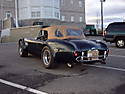
Custom under the car exhaust
Although car is produced as a S/C replica, this car was ordered with an all stainless steel under the car exhaust, with side exhaust dumps in front of the rear wheels, in front of the mufflers.
Not only is the car loud through the rear pipes, it's even much louder with the header dumps open !
|
|
trs900
Mon February 11, 2008 3:17pm
|
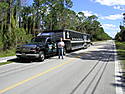
Delivered by Quest transport
Jamie seems to be a real nice and caring person, got my car to me driving throught some lousy weather.. I will use him again.
|
|
TWOOD
Sun February 24, 2008 10:04am
Rating: 10
|
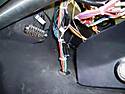
Harness from dash to front and rear
The harness passes through the firewall, above the transmission, and splits into three directions. 1. left side of engine (temp sensors, distributor, horn, lights). 2. right side of engine (battery, starter, alternator). 3. Everything at rear of car.
|
|
TWOOD
Fri March 14, 2008 4:29pm
|
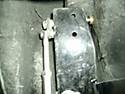
DOOR LATCH RELEASE LINKAGE
View at top end of lionkage with the 1/4" dia. shaft passing through the bronze bushing (epoxied to fiberglass). Lever is attached to end of shaft. Hole in shaft is threaded and has nylock jam nuts on each side.
|
|
Baz
Mon July 14, 2008 10:26pm
|
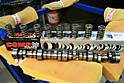
Comp_Roller_Cam_Springs_Small_Large_Small_
Comp XER273HR Hydraulic Roller Cam - Comes in at 2,000 rpm and works right through to 7,000 rpm. Possesses the most aggressive lobes for all applications, street or strip.
|
|
vector1
Wed November 5, 2008 7:55am
|
might have a through the hood problem
finished engine bay & cockpit
|
|

bannishg
Tue November 11, 2008 6:50pm
Rating: 10
|
Hemmings Motor News, Nov 1987
As the story goes, the owner was ready to accept $109k for his car on Wednesday 09/30/1987, but apparently the sale didn't go through, allowing him to take out an ad in Hemmings, taking advantage of the Post-Black Monday price bump!
|
|

RJCCOBRA
Wed January 21, 2009 3:46pm
|
Shell Valley build
The dash panel has been roughed in and the wiring done behind the panel. We need to scroll the edges and make a cover for the slot where the steering column goes through the dash. Then it's on to covering the dash with vinyl.
|
|
n6opv
Thu January 22, 2009 11:07pm
|
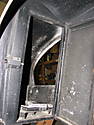
Arntz wheel well doors
Arntz Type 4 only; not on any Butlers. There's one of these doors on each side of the car, at the rear of the rear wheel wells. They open to the space between the rear bodywork and the frame rails. This one on the passenger side allows access to the battery compartment and slide-out tray. The one on the driver's side supposedly allows you to store a collapsible spare tire but I have not found one with a small enough initial diameter to fit through the door. The wheel has to be taken off first to be able to open the doors.
|
|
kitcarbp
Fri March 6, 2009 7:29am
Rating: 9
|
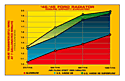
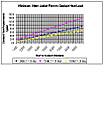
Ford_Raditor_Heat_Rejection_Chart- Street Rod Example
This chart compares the heat rejection rate (cooling capacity) of three different types of radiators tested on an old Ford Street Rod. Coolant flow rate is held constant at 7 gpm (typical flow at idle perhaps, not sure where its being measured ???). It graphs the heat rejection for each radiator versus air flow through the radiator core. It is comparing 3 diff rad designs/materials at different CFMs through the core. The more air flow you have for a given coolant flow rate (7 gpm in this example) , the higher the heat rejection, basically linear in this example. The author of this graph is most likely selling the high efficiency radiator showing the improvement over the other two designs. To sum it up, the radiator at the top of the chart appears to be the most efficient at a low coolant flow rate (7 gal/min) over all air flows tested. Ya see how important rad core/tank design is? I learned something here.
|
|
kitcarbp
Thu March 19, 2009 10:30am
Rating: 10
|
500+ HP Engine Water Jacket Coolant Flow Requirements
This chart shows the linear relationship between the heat rejection (load) of the coolant and the required (calculated) coolant flow in the engine water jacket. It is determined for 3 different temp gradients of the engine inlet and outlet coolant temp. This engine example is from a 500+ horsepower supercharged gas engine assumed to have heat rejection up to maximum power (8,000 btu/min). Why do we care? If you cant keep engine temps under control at speed under load, you may have: 1) insufficient water flow, 2) undersized radiator, or 3) insufficient air flow through the radiator that needs to be addressed. This engine will require coolant flow in the lower part of the curve in street applications (low heat rejection), but for racing/track use this engine will require coolant flow rates towards the top of each curve. For older V8's pre-emissions, the common design target is to keep the radiator Inlet @ 190 F and outlet @ 180F or an average core temp of 185F at steady state conditions or the upper curve shown. Modern engines may use a little higher 195F-185F or rad core avg temp of 190F.
|
|
cay5628
Sat May 2, 2009 10:15am
|
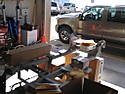
Garage
Lots of boxed parts to pick through. Space is tight,
|
|
cobrajeff
Tue December 22, 2009 8:07am
|
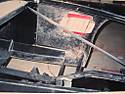
Cut-off frame rails
To make room for 427-style side exhaust, ERA modified my outer frame rails - thye had to be cut short to make room for the pipes to go through the body.
|
|
Z-linkCobra
Thu February 18, 2010 8:25am
|
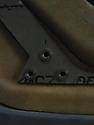
hood support close up.
Here you see the steel threaded collars pressed into the 5/8's holes. I didnt want to thread the aluminum for fear of the threads possibly pulling through.
|
|
Wbulk
Fri July 16, 2010 1:32pm
Rating: 10
|
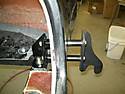
Rear Bumper Modification
Completed modication with the welded on bracket on the end of the tubes cut off and bolts going through to the frame bracket.
|
|