
sganz
Tue December 23, 2008 8:57am
Rating: 1
|
Early Build of the VSE Cobra
Some Dork with the HP Ratings of the motor, motor is basically stock.
|
|
SoTxButler
Sun January 11, 2009 12:43pm
Rating: 10
|
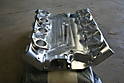
Billet Stack Manifold for High Rise Heads
The runners are canted 15 degrees rather than 10 as most other manifolds.
|
|
kitcarbp
Fri March 6, 2009 7:29am
Rating: 9
|
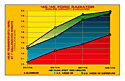
Ford_Raditor_Heat_Rejection_Chart- Street Rod Example
This chart compares the heat rejection rate (cooling capacity) of three different types of radiators tested on an old Ford Street Rod. Coolant flow rate is held constant at 7 gpm (typical flow at idle perhaps, not sure where its being measured ???). It graphs the heat rejection for each radiator versus air flow through the radiator core. It is comparing 3 diff rad designs/materials at different CFMs through the core. The more air flow you have for a given coolant flow rate (7 gpm in this example) , the higher the heat rejection, basically linear in this example. The author of this graph is most likely selling the high efficiency radiator showing the improvement over the other two designs. To sum it up, the radiator at the top of the chart appears to be the most efficient at a low coolant flow rate (7 gal/min) over all air flows tested. Ya see how important rad core/tank design is? I learned something here.
|
|
kitcarbp
Thu March 19, 2009 10:30am
Rating: 10
|
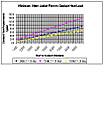
500+ HP Engine Water Jacket Coolant Flow Requirements
This chart shows the linear relationship between the heat rejection (load) of the coolant and the required (calculated) coolant flow in the engine water jacket. It is determined for 3 different temp gradients of the engine inlet and outlet coolant temp. This engine example is from a 500+ horsepower supercharged gas engine assumed to have heat rejection up to maximum power (8,000 btu/min). Why do we care? If you cant keep engine temps under control at speed under load, you may have: 1) insufficient water flow, 2) undersized radiator, or 3) insufficient air flow through the radiator that needs to be addressed. This engine will require coolant flow in the lower part of the curve in street applications (low heat rejection), but for racing/track use this engine will require coolant flow rates towards the top of each curve. For older V8's pre-emissions, the common design target is to keep the radiator Inlet @ 190 F and outlet @ 180F or an average core temp of 185F at steady state conditions or the upper curve shown. Modern engines may use a little higher 195F-185F or rad core avg temp of 190F.
|
|
DocDirk
Sat April 25, 2009 1:13pm
|
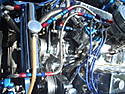
Rat's nest
Hoses to and from the surge tank.
|
|
Dwight
Sun April 26, 2009 6:38am
Rating: 10
|
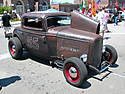
rat rod
fiberglass rat rod paint job
|
|
Dwight
Sun April 26, 2009 6:50am
Rating: 10
|
fiberglass rat rod
fiberglass rat rod
|
|
Dwight
Sun April 26, 2009 6:50am
Rating: 10
|
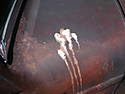
fiberglass rat rod
fiberglass rat rod
|
|
Dwight
Sun April 26, 2009 6:57am
Rating: 10
|
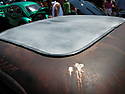
fiberglass rat rod paint job
fiberglass rat rod paint job
|
|
Mooch
Sun September 20, 2009 8:21am
|
|
fkemmerer
Sun November 22, 2009 7:48am
Rating: 10
|
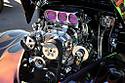
Blown 41 Willys Coupe
Blown and Injected 41 Willys Coupe - 502 ci Rat Motor with a BDS 8-71 Supercharger and EFI.
|
|

Z-linkCobra
Fri January 22, 2010 7:29am
|
SNAKE!!!!!!
Just a baby rattler the dogs were jackin with outside the shop. I like snakes just fine...but not the ones with rattles.
|
|
kitcarbp
Fri January 22, 2010 12:19pm
Rating: 10
|
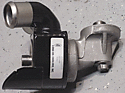
V8 oil cooler
Ford Explorer V8 oil cooler. LONG made this OEM oil cooler for the mid 90's Explorers, if I can shoe horn this into place, it just might be the cooler I was looking for to keep the 460 oil temps uniform. This is hooked up in-line with the lower rad hose. This should have very good water flow rates to cool the oil.
|
|
FUNFER2
Sat February 6, 2010 5:24am
Rating: 10
|
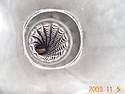
Polished 304 stainless steel "Gilmore" Kit. Muffler
The muffler does not have glass pack to be blown out, but rather louvers. They can be placed going forward, to quite the sound but, it hurts the torque some.
|
|
MaSnaka
Sun March 14, 2010 7:13pm
|
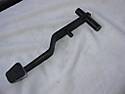
before brake pedal mods
pivot before mod. originally 3.75" from pivot to clevis, 13" pedal length. 3.46 ratio
|
|