
KarlCSX2498
Mon January 26, 2009 6:27pm
Rating: 10
|
CSX2498 at maple grove
this is CSX2498 at maple grove drag strip in the summer of 1970, that is our friend Paul Clayton in the powder blue tiger.
|
|
RJCCOBRA
Wed February 4, 2009 3:01pm
|
Shell Valley build
This is a shot of the light and bracket installed in the new, raised location.
|
|
DocDirk
Thu February 12, 2009 9:28pm
|
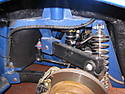
Unusual rear attachment
Seems this setup won't allow any suspension travel at all...??
|
|
jbcobra67
Sat February 14, 2009 5:00pm
Rating: 10
|
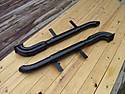
Pipes
Got these on this website thanks Bob Albert.
|
|
Baz
Mon February 23, 2009 8:41pm
|
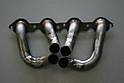
Extractors_for_nearside_bank_Small_
Just finished welding them up. They have to be painted yet. Now the fun starts making the offside extractors as this is where the steering column is.
|
|
kitcarbp
Fri February 27, 2009 8:17am
Rating: 10
|
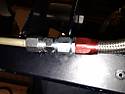
Fuel Line -Hard Tube Steel Adapter to 6 AN Flex Line
To ensure I use all steel, I had to use different vendors, Aeroquip hard tube compression fitting and Earls Auto fit hose end, Russell fuel hose, but all coated steel material for a reliable leak free fuel connection. This is intended as a street application so NO aluminum line is used. Remember, aluminum hard line may not be D.O.T. legal for the steet in your State!!
|
|
kitcarbp
Fri March 6, 2009 7:29am
Rating: 9
|
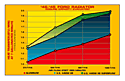
Ford_Raditor_Heat_Rejection_Chart- Street Rod Example
This chart compares the heat rejection rate (cooling capacity) of three different types of radiators tested on an old Ford Street Rod. Coolant flow rate is held constant at 7 gpm (typical flow at idle perhaps, not sure where its being measured ???). It graphs the heat rejection for each radiator versus air flow through the radiator core. It is comparing 3 diff rad designs/materials at different CFMs through the core. The more air flow you have for a given coolant flow rate (7 gpm in this example) , the higher the heat rejection, basically linear in this example. The author of this graph is most likely selling the high efficiency radiator showing the improvement over the other two designs. To sum it up, the radiator at the top of the chart appears to be the most efficient at a low coolant flow rate (7 gal/min) over all air flows tested. Ya see how important rad core/tank design is? I learned something here.
|
|
Clois Harlan
Mon March 9, 2009 6:32pm
|
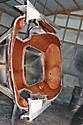
Hand laid Fiberglass
This is where the body begins
|
|
Clois Harlan
Mon March 9, 2009 6:32pm
|
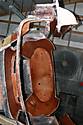
HCS Body in the Beginning
This is Body #3
|
|
Clois Harlan
Mon March 9, 2009 6:32pm
|
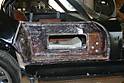
Inside the door skin
I took this shot to show how the hinges and latches have been reinforced with steel. This is a shot seldom seen on most kit cars. By the way the latch will be electric and operable by remote, push button, or manually. Just a small liberty taken here.
|
|
Clois Harlan
Mon March 9, 2009 6:32pm
|
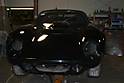
HCS Coupe Nose shot
Look how beautiful the finish is on the coupe. Your painter will love the care that has been taken to produce such a flawless gel coat finish. The whole body was buffed less than an hour to produce this finish ...I was there.
|
|

Clois Harlan
Mon March 9, 2009 6:32pm
|
Full shot of HCS Coupe
I know the picture is dark but I forgot to allow my flash on this shot but you can see how well the body has came out of the mold.
|
|
Clois Harlan
Mon March 9, 2009 6:33pm
|
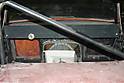
Dash
Looking from the trun this is the dash and the quick release steering wheel. Just wait until we get the inside finished out with the best gauges on the market ...definetly high end!
|
|
kitcarbp
Thu March 19, 2009 10:30am
Rating: 10
|
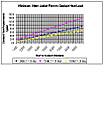
500+ HP Engine Water Jacket Coolant Flow Requirements
This chart shows the linear relationship between the heat rejection (load) of the coolant and the required (calculated) coolant flow in the engine water jacket. It is determined for 3 different temp gradients of the engine inlet and outlet coolant temp. This engine example is from a 500+ horsepower supercharged gas engine assumed to have heat rejection up to maximum power (8,000 btu/min). Why do we care? If you cant keep engine temps under control at speed under load, you may have: 1) insufficient water flow, 2) undersized radiator, or 3) insufficient air flow through the radiator that needs to be addressed. This engine will require coolant flow in the lower part of the curve in street applications (low heat rejection), but for racing/track use this engine will require coolant flow rates towards the top of each curve. For older V8's pre-emissions, the common design target is to keep the radiator Inlet @ 190 F and outlet @ 180F or an average core temp of 185F at steady state conditions or the upper curve shown. Modern engines may use a little higher 195F-185F or rad core avg temp of 190F.
|
|
kitcarbp
Wed March 25, 2009 11:28am
Rating: 10
|
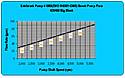
429_and_460_water_pump_flow
I learned that Edelbrock makes the water pump for the Ford Racing 460 Crate engines. This is part number M-8501-C460 or Edelbrock # 8866. The flow values were provided by Edelbrock via their TECH HOT LINE, I graphed them as a visual aid.
|
|