 
 Main Menu
|
|
Nevada Classics
|
|
Advertise at CC
|
| S |
M |
T |
W |
T |
F |
S |
| 1 |
2 |
3 |
4 |
5 |
6 |
7 |
| 8 |
9 |
10 |
11 |
12 |
13 |
14 |
| 15 |
16 |
17 |
18 |
19 |
20 |
21 |
| 22 |
23 |
24 |
25 |
26 |
27 |
28 |
|
|
CC Advertisers
|
|
|
9 result(s) to your search. (chart)
|
·
|
|
Fitz
Mon November 8, 2004 2:11pm
|
|
Rwillia4
Tue January 30, 2007 10:32pm
Rating: 10
|
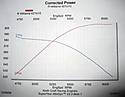
Keith Craft 427w FI TWM FAST Dyno Chart
|
|
Ronbo
Fri May 9, 2008 6:23pm
Rating: 10
|
|
Great Asp
Fri November 7, 2008 5:58am
Rating: 10
|
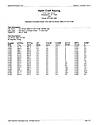
496 FE chart with DynaTek injection
|
|
kitcarbp
Fri March 6, 2009 7:29am
Rating: 9
|
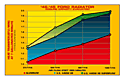
Ford_Raditor_Heat_Rejection_Chart- Street Rod Example
This chart compares the heat rejection rate (cooling capacity) of three different types of radiators tested on an old Ford Street Rod. Coolant flow rate is held constant at 7 gpm (typical flow at idle perhaps, not sure where its being measured ???). It graphs the heat rejection for each radiator versus air flow through the radiator core. It is comparing 3 diff rad designs/materials at different CFMs through the core. The more air flow you have for a given coolant flow rate (7 gpm in this example) , the higher the heat rejection, basically linear in this example. The author of this graph is most likely selling the high efficiency radiator showing the improvement over the other two designs. To sum it up, the radiator at the top of the chart appears to be the most efficient at a low coolant flow rate (7 gal/min) over all air flows tested. Ya see how important rad core/tank design is? I learned something here.
|
|
eschaider
Sat March 7, 2009 1:34am
Rating: 10
|
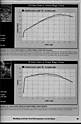
Stock vs Aftermerket Cam
HP difference between OEM and Crower Stage II cams
|
|
kitcarbp
Thu March 19, 2009 10:30am
Rating: 10
|
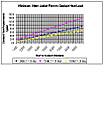
500+ HP Engine Water Jacket Coolant Flow Requirements
This chart shows the linear relationship between the heat rejection (load) of the coolant and the required (calculated) coolant flow in the engine water jacket. It is determined for 3 different temp gradients of the engine inlet and outlet coolant temp. This engine example is from a 500+ horsepower supercharged gas engine assumed to have heat rejection up to maximum power (8,000 btu/min). Why do we care? If you cant keep engine temps under control at speed under load, you may have: 1) insufficient water flow, 2) undersized radiator, or 3) insufficient air flow through the radiator that needs to be addressed. This engine will require coolant flow in the lower part of the curve in street applications (low heat rejection), but for racing/track use this engine will require coolant flow rates towards the top of each curve. For older V8's pre-emissions, the common design target is to keep the radiator Inlet @ 190 F and outlet @ 180F or an average core temp of 185F at steady state conditions or the upper curve shown. Modern engines may use a little higher 195F-185F or rad core avg temp of 190F.
|
|
kitcarbp
Fri March 27, 2009 10:17am
Rating: 10
|
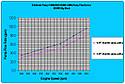
Edelbrock/Ford SVO 429/460 Pump Flow Chart
Here is a chart I put together that compares the two different popluar pulley sizes available in the aftermarket for the 429/460 in fancy shmancy polished powder coated clear aluminum pulleys. The big pulley is not the way to go, you cant get enough flow to cool these high horsepower motors on the street.
|
|
Moriarty
Thu July 30, 2020 5:14pm
|
|
|
All times are GMT -7. The time now is 07:46 AM.
Links monetized by VigLink |