Looks like a new form of modern furniture. Maybe a nice coffee table styled after a Noguchi? Will it have green tented glass with a nice pencil edge? Always breaking new ground out there. Good stuff...
Not sure what temper you are using, but typically in a billet that thick, the center does not have the same temper as the outer couple of inches (can be gummy to machine too). When I have made big parts from a solid billet, I usually machine to near-net shape (the part moves after this due to removing internally stressed material), then re-heat-treat (it walks a little more during the re-heat treat). Then come back for the finish machining to final dimension, after all the stresses are stable again. This is normally followed and required practice for aerospace structures, but maybe not for this application?
Having seen you are an Engineer, I assume you have considered this. Was wondering what your plan was.
__________________
E. Wood
ItBites
10.69 @ 129.83mph - on pump gas and street tires
Cobra Make, Engine: Classic Roadster 351W, T5, Red & White
Posts: 3,478
Not Ranked
Continuation of the KMU 101 curriculum , leading to the 201 & advanced 301 courses.
Logo for KMU is ? Will there be polo shirts & baseball caps ?
__________________
2014 Porsche Cayman S, 2014 M-B CLA 45 AMG,
Unkown:"Their sweet lines all but take my breath away, and I desire them as much for their beauty as for their use "
Continuation of the KMU 101 curriculum , leading to the 201 & advanced 301 courses.
Logo for KMU is ? Will there be polo shirts & baseball caps ?
Logo...yes, I will work on that. My wife made the KK logo. I'll ask her to make a KU logo as well. She is busy with our Annual Open House right now, however. I really do enjoy posting these videos.
Not sure what temper you are using, but typically in a billet that thick, the center does not have the same temper as the outer couple of inches (can be gummy to machine too). When I have made big parts from a solid billet, I usually machine to near-net shape (the part moves after this due to removing internally stressed material), then re-heat-treat (it walks a little more during the re-heat treat). Then come back for the finish machining to final dimension, after all the stresses are stable again. This is normally followed and required practice for aerospace structures, but maybe not for this application?
Having seen you are an Engineer, I assume you have considered this. Was wondering what your plan was.
You bring up really good, valid points. We haven't gone through all the discussion (yet) of why we did what we did. That will come a bit later. One of the things we did to mitigate the difference in hardness from inside to outside is to remove the entire bottom end of the motor (where the main caps are) and make that in a separate piece. (All the main caps are made from a single piece).
As for machining the part close to net and re-heat treating--yes, that certainly is a great option and, as you say, it is done on many aerospace parts. I don't think we will need to do that here--but we will see. In a car we have the luxury of pulling off to the side of the road and enduring the laughs of the Corvette guys as we pull over on the side of the road. It is a bit more difficult to pull over in an air plane when something goes wrong
We are very careful in our machining practices to remove most of the material around the block to let it stress relieve as we machine it. We also do not take heavy cuts as even heavy cuts can induce unwanted stresses into the part. After we get close we do a pre-final machine where we still leave material on the block. Then, finally, we do a small, overall, finish pass.
We will discuss more of our plan on this in the upcoming days. Right now we are buried with Darren's Flip Top project.
David
ps. I am not an engineer. I left BYU with one class left to go (as a Spanish Major with a Manufacturing Engineering Technology minor--on my way to med school to complicate matters further). My last semester I heard about this MiG factory in Poland that was looking for work...
David since you mentioned buiding a gym in your shop I could not help but wonder. I can imagine you looking at your gym equiptment and thinking how you would have built it. Just curious if that thought passed through your mind....
David since you mentioned buiding a gym in your shop I could not help but wonder. I can imagine you looking at your gym equiptment and thinking how you would have built it. Just curious if that thought passed through your mind....
We are working on some new equipment right now. There is a piece of equipment we want and we can't find it. So, we'll make it. We have made a few billet parts up in the gym already.
We are just a bit tied up right now with another little project to make the other piece we need
I thought you were the Engineer... Musta been Tom?
If you're not gonna re-heat treat, two things:
1. Your strength, especilly yield strength will be low in the center of the billet. Period. Further, your hardness will be down as well. These may not be any issue if you have put the thickness in the right places. Any aluminum billet above a T-4 condition and thicker than 6" suffers from property degradation in the center. Billets 12" thick can be real bad in the center, but depends on your source a little bit.
2. Your block will warp when you unclamp it from the CNC bed, even taking small amounts of material per pass (unless you unbolt it to allow relief between passes). You can mitigate some of this by unbolting from the CNC bed after each or a couple of passes and re-truing you datum (or even shimming your datum). To properly do this you need to index off of other important features (bore centerlines, crank centerline, and cam centerline...) and measure the block again in the 'free' state. Determine the average of how things moved and adjust your datum accordingly. I have done this, but it is very tedious to do right, and at the end, you still have, at best, an average of tolerances and dimensions.
Not knocking what you're doing (trust me, I am not, I see that you guys do some very cool stuff). Just hoping to share some advice from someone who has been there and also interested in learning, if y'all have found a way to do what you're attempting, without dimensional walk. I could use that mojo!
__________________
E. Wood
ItBites
10.69 @ 129.83mph - on pump gas and street tires
Cobra Make, Engine: Kirkham KMP500 LeMans- Roush 451 Shelby block; KMP Flip-top with cammer: KMP 289 Bronze under construction.
Posts: 285
Not Ranked
David, I'm wondering if you can recommend a good layman's introduction to metallurgy. I'm not looking for something to prepare me for a career change or anything; I just want to be able to "speak the language" and understand what the heck people are talking about when they refer to various metallurgical processes. I have a decent background in chemistry and medicine and should be a quick study. Thanks, Darren...















 Kirkham Skunk Works Sneak Peak :)


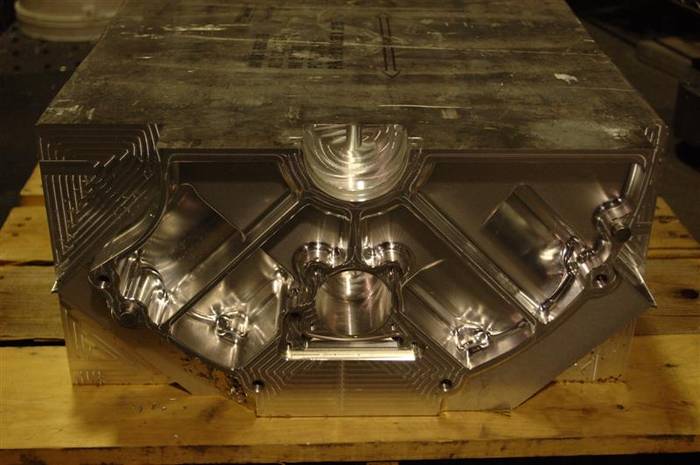


 Designer aluminum engine!


 :
:


 Hybrid Mode


