 
 Main Menu
|
|
Nevada Classics
|
|
Advertise at CC
|
| S |
M |
T |
W |
T |
F |
S |
| |
|
|
|
|
1 |
2 |
| 3 |
4 |
5 |
6 |
7 |
8 |
9 |
| 10 |
11 |
12 |
13 |
14 |
15 |
16 |
| 17 |
18 |
19 |
20 |
21 |
22 |
23 |
| 24 |
25 |
26 |
27 |
28 |
29 |
30 |
| 31 |
|
|
|
|
|
|
|
|
CC Advertisers
|
|
 10Likes 10Likes

05-04-2014, 08:42 AM
|
 |
CC Member

|
|
|
Join Date: Apr 2008
Location: Melbourne,
Vic
Cobra Make, Engine: Some polish thing... With some old engine
Posts: 2,286
|
|

 Not Ranked
Quote:
Originally Posted by Jerry Clayton

There is no such thing as VARIBLE MASS----a fiqure skater does not change mass as they pull in there arms/leg----------
An engine on acceleration cannot reduce the radius of the mass as a fiqure skater does during a spin----------
A figure skater is considerably LESS than ONE horse power, however, can and maybe does benefit from variable rotational radius during a spin and variable stroke with the judges before/after contest-------------
|
Air resistance (drag) of flailing limbs reduces speed.
Removing this resistance force, by tucking in, aids the acceleration.
As per above eg: It's about factoring in all things, and not closing your mind to prove/justify a hypothesis, just because it's the perceived norm  |
05-04-2014, 08:52 AM
|
|
CC Member
|
|
|
Join Date: Apr 2011
Posts: 1,092
|
|
Not Ranked
Quote:
Originally Posted by Jerry Clayton
There is no such thing as VARIBLE MASS----a fiqure skater does not change mass as they pull in there arms/leg----------
|
yeah, that's my point - skater's mass remains unchanged but the rotational mass changes dramatically, read it again.
patrickt's comment illustrates exactly what we're talking about ...
I had my FE specifically built to be, in my uneducated words, "a quick revver." The builder went with a slightly shorter stroke, and all light weight stuff ...
patrickt's engine builder reduced the rotating mass of his engine by incorporating those mods. |
05-04-2014, 08:58 AM
|
 |
Half-Ass Member
|
|
|
Join Date: Jun 2005
Cobra Make, Engine: ERA #732, 428FE (447 CID), TKO600, Solid Flat Tappet Cam, Tons of Aluminum
Posts: 22,025
|
|
Not Ranked
Quote:
Originally Posted by AL427SBF
...The builder went with a slightly shorter stroke,
|
We had the "does a shorter stroke make a revvier engine" debate a few years ago. We had four very smart, very experienced FE builders chime in. Two said it absolutely did, two said it absolutely didn't.  |
05-04-2014, 08:59 AM
|
 |
CC Member
|
|
|
Join Date: May 2000
Location: Northern VA,
VA
Cobra Make, Engine: Classic Roadsters
Posts: 2,765
|
|
Not Ranked
 UHhhhhh
A fatter figure skater will rev faster than a thinner figure skater unless they are wearing a blue outfit with ruffles or if there is a full moon out.
.
__________________
LIFE IS TOO SHORT TO WORRY ABOUT GOOD GAS MILEAGE
________
Utinam logica falsa tuam philosophiam totam suffodiant!
________
|
05-04-2014, 09:08 AM
|
|
CC Member
|
|
|
Join Date: Apr 2011
Posts: 1,092
|
|
Not Ranked
Quote:
Originally Posted by CobraEd
A fatter figure skater will rev faster than a thinner figure skater unless they are wearing a blue outfit with ruffles or if there is a full moon out.
.
|
lol, one last crack at it and then let them believe what they want to.
Less rotating mass = less inertia to move it (in this case spin it up or slow it down). Your engine's rotating mass is a parasitic drag on the motor, stored energy does nothing for you in terms of car acceleration*, the less rotating mass the less parasitic drain on the motor.
*unless you can rev it up and dump the clutch like in a 1/4 mile launch. |
05-04-2014, 09:39 AM
|
|
CC Member
|
|
|
Join Date: May 2000
Location: Northern VA,
VA
Cobra Make, Engine: Classic Roadsters
Posts: 2,765
|
|
Not Ranked
Quote:
Originally Posted by AL427SBF
lol, one last crack at it and then let them believe what they want to.
Less rotating mass = less inertia to move it (in this case spin it up or slow it down). Your engine's rotating mass is a parasitic drag on the motor, stored energy does nothing for you in terms of car acceleration*, the less rotating mass the less parasitic drain on the motor.
*unless you can rev it up and dump the clutch like in a 1/4 mile launch.
|
Very eloquently stated, however your talking points are loaded with logic and empirically proven concepts. Unfortunately, given what we have read earlier, none of that applies here. 
If I could add one additional new point just to add some flavor to this discussion, not only does the heavier big block crank add more parasitic rotational drag on the motor, but the heavier big block rods and pistons add more parasitic drag on the motor due to greater reciprocating mass. Let the games begin !!!!
.
.
__________________
LIFE IS TOO SHORT TO WORRY ABOUT GOOD GAS MILEAGE
________
Utinam logica falsa tuam philosophiam totam suffodiant!
________
|
05-04-2014, 10:02 AM
|
 |
CC Member
|
|
|
Join Date: Jul 2005
Location: Bartlett,
Ill
Cobra Make, Engine: Everett-Morrison LS1
Posts: 2,448
|
|
Not Ranked
Can someone explain to me what is a BOB weight??????????
Intake and exhaust runner lengths will probably effect accel rates on an engine more than mass of rotating assy.
List and verify your engines acceleration rates and show cam specs and balance card.
|
05-04-2014, 10:38 AM
|
|
CC Member
|
|
|
Join Date: Dec 2001
Location: Louisville,
KY
Cobra Make, Engine: I'm Cobra-less!
Posts: 9,417
|
|
Not Ranked
Quote:
Originally Posted by Jerry Clayton
Can someone explain to me what is a BOB weight??????????
Intake and exhaust runner lengths will probably effect accel rates on an engine more than mass of rotating assy.
List and verify your engines acceleration rates and show cam specs and balance card.
|
Absolutely, spoken from an engine builder and not a figure skating enthusiast.
There's a lot more to it than reciprocating assembly masses, hence my example of one of Jon Kaase's mountain motors, 4.8" bore, 5.75" stroke, with 7.750" rods that weigh a chunk....but yet respond instantaneously and will pull to 10000 rpm. |
05-04-2014, 10:39 AM
|
|
CC Member
|
|
|
Join Date: May 2000
Location: Northern VA,
VA
Cobra Make, Engine: Classic Roadsters
Posts: 2,765
|
|
Not Ranked
It's sad really 
.
__________________
LIFE IS TOO SHORT TO WORRY ABOUT GOOD GAS MILEAGE
________
Utinam logica falsa tuam philosophiam totam suffodiant!
________
|
05-04-2014, 10:43 AM
|
|
Half-Ass Member
|
|
|
Join Date: Jun 2005
Cobra Make, Engine: ERA #732, 428FE (447 CID), TKO600, Solid Flat Tappet Cam, Tons of Aluminum
Posts: 22,025
|
|
Not Ranked
I've said it a million times before, the only reason you would not put an FE in to a Cobra is to save a couple of bucks. If you throw enough money at it, you can build an FE that will fly you to the moon. |
05-04-2014, 11:02 AM
|
|
CC Member
|
|
|
Join Date: Dec 2001
Location: Louisville,
KY
Cobra Make, Engine: I'm Cobra-less!
Posts: 9,417
|
|
Not Ranked
Quote:
Originally Posted by CobraEd
It's sad really
. |
Yes it is...
Along with these same generalizations:
*Single plane intakes are only good for high rpms.
*Having pistons with the oil ring intersecting the wrist pin will cause the engine to use oil.
*Long stroke engines can not turn high rpms.
*Solid roller lifters fail with street use.
*High volume oil pumps break oil pump drive shafts.
*FE's are high maintenance.
Each statement has qualifiers, but each is not true as a blanket statement.
However, these statements are continually passed on as gospel by forum members everywhere. |
05-04-2014, 11:31 AM
|
|
CC Member
|
|
|
Join Date: Dec 2001
Location: Louisville,
KY
Cobra Make, Engine: I'm Cobra-less!
Posts: 9,417
|
|
Not Ranked
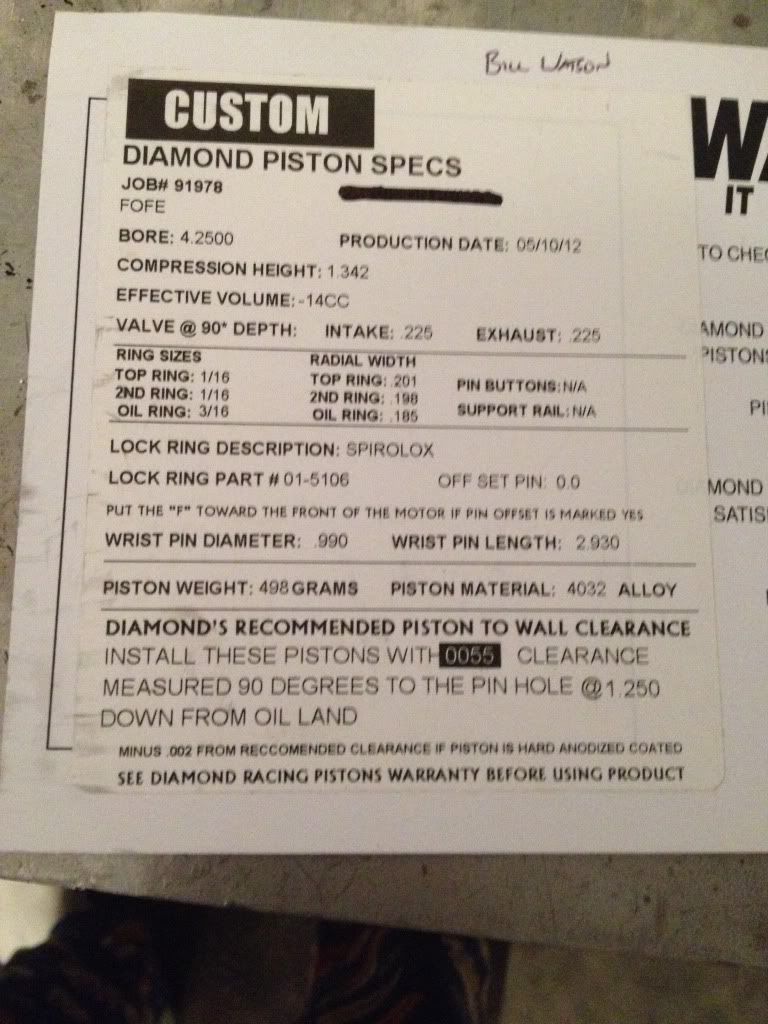
Here's a heavy old FE piston....
And here's a light Windsor piston....
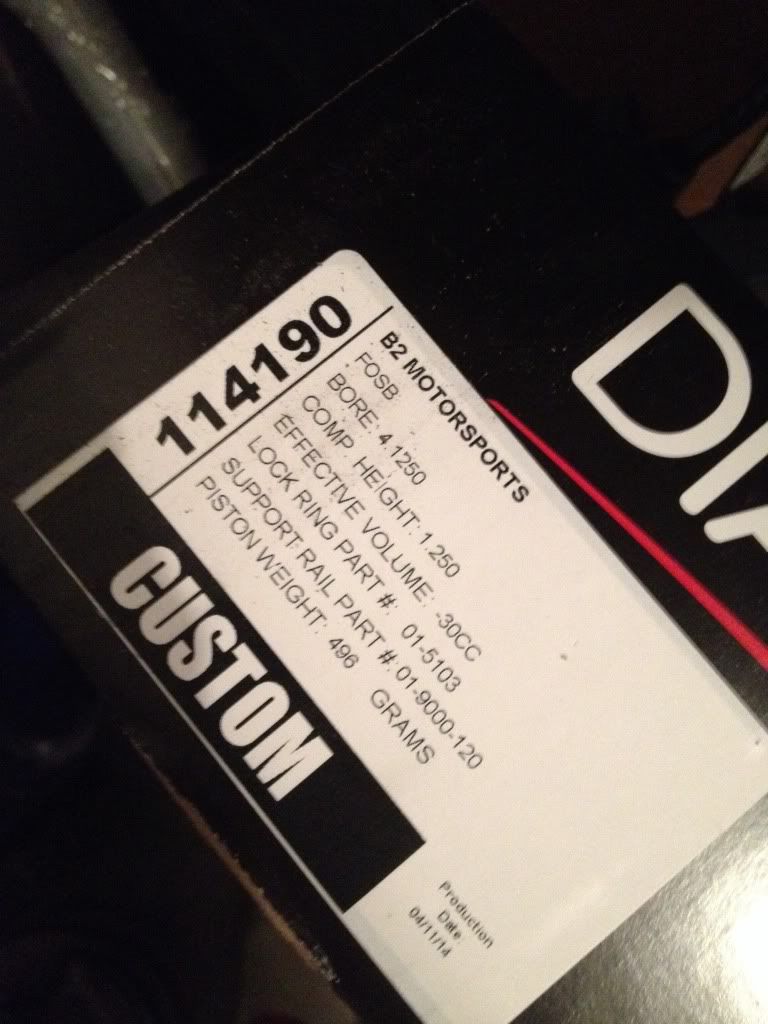
Neither one of those are what I would consider "exotic". They are both custom pistons from Diamond, and the FE piston is for a 4.125" stroke, which makes it taller than the pistons I would use for a 4.250" stroke build.
You will notice that the Windsor piston has a pretty substantial 30cc dish in it, while the FE piston has a small 14cc volume. You can also note that the Windsor piston uses a support rail, which adds to the piston/ring package weight.
The FE piston could have been made extensively lighter.
Just one piece of the puzzle of course, and rod design/weight makes a pretty substantial difference in itself, but it's easy to see that you can cut down big block reciprocating part weight without a lot of effort.
I would also suggest that the non-builders here look into the difference between "rotating weight" and "reciprocating weight", which we use to both balance and to pick lightweight combos for race applications. |
05-04-2014, 12:25 PM
|
 |
CC Member
|
|
|
Join Date: Feb 2006
Location: Gilroy,
CA
Cobra Make, Engine: SPF 2291, Whipple Blown & Injected 4V ModMotor
Posts: 2,742
|
|
Not Ranked
I am going to suggest that the original statement should have been two engines with similar power curves will accelerate similarily with identical rotating assemblies. Identical rotating assemblies will have the same stroke, rotating assembly weight, diameter and weight placement relative to the crankshaft centerline.
As AL427SBF and/or Cobra ED have already pointed out if you hang a heavy flywheel on one engine and a light flywheel on another identical engine the one with the heavy flywheel will no longer accelerate as quickly as the one with the light flywheel. The same is true if you exchange one rotating assembly for an identical but heavier rotating assembly.
When you remove the rotating assembly from one engine and replace it with a heavier rotating assembly (that provides the same displacement, compression etc) the engine with the now heavier rotating assembly will accelerate more slowly because additional torque is being consumed to accelerate the heavier rotating assembly. Not surprisingly the dyno will also measure less torque being produced because some has already been siphoned off to rotate the now heavier rotating assembly.
When you introduce the variable of different engine designs, even if they result in similar displacements, the ability to noodle this out in our heads is all but non existent. Let me give you an example;
If I choose an engine with 340 gram wrist pins 970 gram pistons and comparably "heavy rods" most observers would say you are looking a a low speed truck engine. In fact they do measure up weight wise similarly. Performance (engine acceleration) is measurably different however. The engine I just described hits it's peak engine speed in literally microseconds after the hit of the throttle — Jerry I am certain already knows what I am talking about.
The reason for the rapid engine acceleration, even under load with this massive rotating assembly, is that the power produced dwarfs any parasitic drag in the engine. If you used this simple comparison, without seeing the actual engine or knowing its power output, you might be tempted to argue heavy rotating assemblies increase engine acceleration. Of course we all know they do not. BTW the engine with those massive rotating assembly components is a fuel motor.
Comparing big block and small block engine acceleration performance can be equally surprising and misleading. The problem is not just the effect of the increased rotational inertia one internal assembly over the other. Instead it is the differences in the intrinsic power production along with the shape of that power curve — one engine architecture vs the other because now we are looking at two different engine designs and implementations. These differences will consistently mislead you and cloud your ability to noodle out the answer in your head.
One thing however is for certain, all things being equal, two identical engines, one of which has a lighter rotating assembly, the engine with the lighter rotating assembly will always out accelerate the engine with the heavier rotating assembly — it is inescapable.
Ed
__________________
 Help them do what they would have done if they had known what they could do.
|
05-04-2014, 12:33 PM
|
|
CC Member
|
|
|
Join Date: May 2000
Location: Northern VA,
VA
Cobra Make, Engine: Classic Roadsters
Posts: 2,765
|
|
Not Ranked
Quote:
Originally Posted by eschaider
I am going to suggest that the original statement should have been two engines with similar power curves will accelerate similarily with identical rotating assemblies. Identical rotating assemblies will have the same stroke, rotating assembly weight, diameter and weight placement relative to the crankshaft centerline.
As AL427SBF and/or Cobra ED have already pointed out if you hang a heavy flywheel on one engine and a light flywheel on another identical engine the one with the heavy flywheel will no longer accelerate as quickly as the one with the light flywheel. The same is true if you exchange one rotating assembly for an identical but heavier rotating assembly.
When you remove the rotating assembly from one engine and replace it with a heavier rotating assembly (that provides the same displacement, compression etc) the engine with the now heavier rotating assembly will accelerate more slowly because additional torque is being consumed to accelerate the heavier rotating assembly. Not surprisingly the dyno will also measure less torque being produced because some has already been siphoned off to rotate the now heavier rotating assembly.
When you introduce the variable of different engine designs, even if they result in similar displacements, the ability to noodle this out in our heads is all but non existent. Let me give you an example;
If I choose an engine with 340 gram wrist pins 970 gram pistons and comparably "heavy rods" most observers would say you are looking a a low speed truck engine. In fact they do measure up weight wise similarly. Performance (engine acceleration) is measurably different however. The engine I just described hits it's peak engine speed in literally microseconds after the hit of the throttle — Jerry I am certain already knows what I am talking about.
The reason for the rapid engine acceleration, even under load with this massive rotating assembly, is that the power produced dwarfs any parasitic drag in the engine. If you used this simple comparison, without seeing the actual engine or knowing its power output, you might be tempted to argue heavy rotating assemblies increase engine acceleration. Of course we all know they do not. BTW the engine with those massive rotating assembly components is a fuel motor.
Comparing big block and small block engine acceleration performance can be equally surprising and misleading. The problem is not just the effect of the increased rotational inertia one internal assembly over the other. Instead it is the differences in the intrinsic power production along with the shape of that power curve — one engine architecture vs the other because now we are looking at two different engine designs and implementations. These differences will consistently mislead you and cloud your ability to noodle out the answer in your head.
One thing however is for certain, all things being equal, two identical engines, one of which has a lighter rotating assembly, the engine with the lighter rotating assembly will always out accelerate the engine with the heavier rotating assembly — it is inescapable.
Ed
|
Wow, great explanation! You took the time and effort to nail it in great detail. I tend to throw out short descriptions because I just assume that everyone will get it. Unfortunately only "most" people get it. You took a lot of time and with a great deal of patience to explain this very very thoroughly. I wish I had as much patience as you. Good for you . . . you get the gold star!
.
__________________
LIFE IS TOO SHORT TO WORRY ABOUT GOOD GAS MILEAGE
________
Utinam logica falsa tuam philosophiam totam suffodiant!
________
|
05-04-2014, 12:39 PM
|
|
CC Member
|
|
|
Join Date: Dec 2001
Location: Louisville,
KY
Cobra Make, Engine: I'm Cobra-less!
Posts: 9,417
|
|
Not Ranked
Unfortunately, it doesn't help those who only read into it what they want...
I agree, eschaider, that was an excellent post, and your example about the heavy rotating assembly weight of a fuel motor more than adequately proves the point that there's more to it than a light rotating assembly, figure skaters, and physics books. Kudos.
Your point about the two identical engines, is also spot on. However, it's about impossible to get these guys to realize that there are big blocks that have lighter rotating assemblies, and not every small block will "out-rev" (in their terms) a big block.
Not sure why CobraEd and Al made this such a convoluted post, it's really quite simple to understand the underlying point. I think everyone here has got it except for those two. |
05-04-2014, 12:49 PM
|
|
CC Member
|
|
|
Join Date: May 2000
Location: Northern VA,
VA
Cobra Make, Engine: Classic Roadsters
Posts: 2,765
|
|
Not Ranked
Quote:
Originally Posted by blykins
Unfortunately, it doesn't help those who only read into it what they want...
I agree, eschaider, that was an excellent post, and your example about the heavy rotating assembly weight of a fuel motor more than adequately proves the point that there's more to it than a light rotating assembly, figure skaters, and physics books. Kudos.
Your point about the two identical engines, is also spot on. However, it's about impossible to get these guys to realize that there are big blocks that have lighter rotating assemblies, and not every small block will "out-rev" (in their terms) a big block.
Not sure why CobraEd and Al made this such a convoluted post, it's really quite simple to understand the underlying point. I think everyone here has got it except for those two. |
Actually everyone here got it but you. That is why eschaider wrote this. to explain it to YOU. He is agreeing with us!
.
__________________
LIFE IS TOO SHORT TO WORRY ABOUT GOOD GAS MILEAGE
________
Utinam logica falsa tuam philosophiam totam suffodiant!
________
|
05-04-2014, 12:57 PM
|
|
CC Member
|
|
|
Join Date: Dec 2001
Location: Louisville,
KY
Cobra Make, Engine: I'm Cobra-less!
Posts: 9,417
|
|
Not Ranked
ROFL, I don't think so Tim.
Dude, here's the recap.
*All small blocks won't out-accelerate all big-blocks. Why you're defending that is certainly beyond me.
*Big block rotating assemblies are not always heavier.
*Even when they are heavier, there are other factors that control acceleration.
That's as plainly as I can put it. I know your head is harder than a one piece fuel pump eccentric, but get rid of the ego and the pride and please try. Maybe there's a miscommunication error and we all agree with each other, but by your replies, I simply don't think so.
Jerry (BTW, he understands my viewpoint as well) and I have got to get back to building race engines. You and Al can get back to watching Brian Boitano.
|
05-04-2014, 05:45 PM
|
 |
Full Blown Member
|

|
|
Join Date: Sep 2008
Cobra Make, Engine: KMP 427 S/C, Twin Paxton 511 FE
Posts: 2,594
|
|
Not Ranked
I understand that a lighter reciprocating mass will rev faster, but it doesn't mean it will under load.
Any weed wacker can "rev faster" than my engine. As did the makes of the skirmishes I've had on the freeway, from Ferraris to Lamborghinis to Porsches, et al.
I can't make sense of it. Their engines rev faster than mine, but they end up in my rear view mirror in a matter of a couple seconds.
__________________
rodneym
|
05-04-2014, 06:35 PM
|
|
CC Member
|
|
|
Join Date: Oct 2003
Posts: 4,078
|
|
Not Ranked
Quote:
Originally Posted by rodneym
Their engines rev faster than mine, but they end up in my rear view mirror in a matter of a couple seconds.
|
T-o-r-q-u-e my friend.
__________________
Chas.
|
05-04-2014, 07:02 PM
|
|
CC Member
|
|
|
Join Date: Apr 2011
Posts: 1,092
|
|
Not Ranked
Quote:
Originally Posted by rodneym
I understand that a lighter reciprocating mass will rev faster, but it doesn't mean it will under load.
Any weed wacker can "rev faster" than my engine. As did the makes of the skirmishes I've had on the freeway, from Ferraris to Lamborghinis to Porsches, et al.
I can't make sense of it. Their engines rev faster than mine, but they end up in my rear view mirror in a matter of a couple seconds.
|
Apples and oranges comparison, twin paxton 468 FE in a light Kirkham against much heavier euro competition and you can't make sense of it lmao. |
| Thread Tools |
|
|
| Display Modes |
Rate This Thread |
 Hybrid Mode Hybrid Mode
|
|
 Posting Rules
|
You may not post new threads
You may not post replies
You may not post attachments
You may not edit your posts
HTML code is Off
|
|
|
All times are GMT -7. The time now is 02:51 PM.
Links monetized by VigLink
|